Written by Hope Stewart — Founder & Advanced Aesthetics Practitioner, Aesthetics Collective, Loughborough.
This is the aftercare advice I give every summer client in my East Midlands clinics.
Last reviewed: July 2026 · Educational content — always follow the personalised aftercare given by your own practitioner.
Key takeaways:
Injectable treatments are safe in summer, but UV genuinely degrades hyaluronic acid and collagen. Protect results by avoiding direct sun, heat and hard exercise for 24–48 hours after treatment, avoiding sunbathing for 1–2 weeks after filler, and wearing broad-spectrum SPF 30+ every day.
Every June the same question arrives in my inbox: "Can I still have my treatment done, or should I wait until after summer?" It's a sensible question — and search data suggests the whole country is asking it: one recent industry report noted that searches for "how long do dermal fillers last?" spiked by 5,000% in a single month as warm weather arrived. Here's my honest, evidence-based answer.
Does sun actually break down filler?
Yes — over time and with enough exposure. Hyaluronic acid, the substance in the Revolax fillers and skin boosters I use, is degraded by UV radiation, along with your natural collagen and elastin. That doesn't mean one sunny afternoon dissolves your lips. It means chronic, unprotected exposure shortens the life of a treatment you've paid good money for. Clinical guidance is consistent: if you're within the first week or two after filler, avoid sun exposure and follow aftercare closely; beyond two weeks, normal temperatures and protected sun exposure shouldn't affect settled results.
Why the first 48 hours matter most
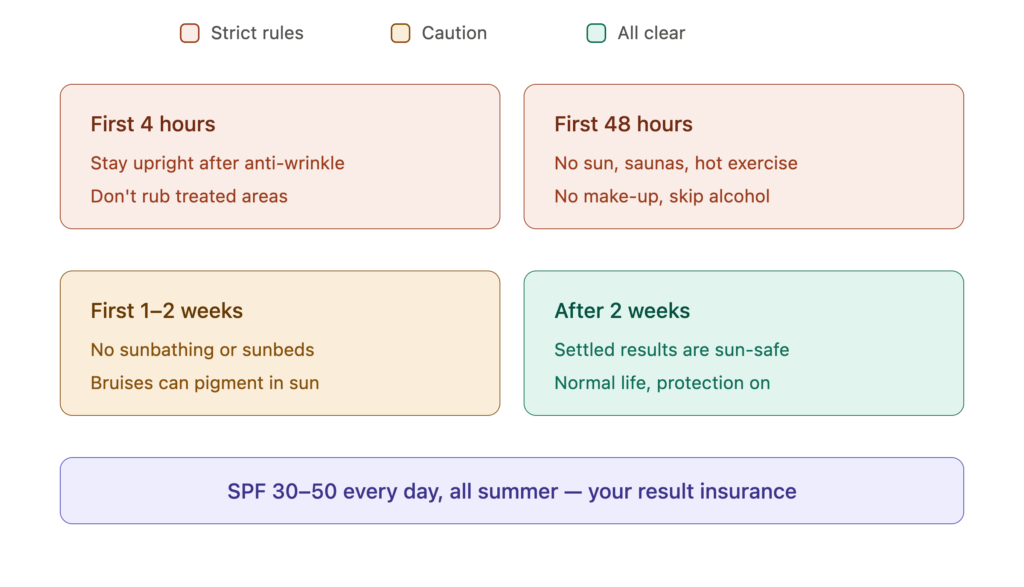
Freshly treated skin is inflamed skin. Heat — whether from sunbathing, saunas, hot yoga or a heavy gym session — dilates blood vessels, which can worsen swelling and bruising and prolong your recovery. My standard summer rules after any injectable:
- 24–48 hours: no direct sunbathing, sunbeds, saunas, steam rooms, hot tubs or strenuous exercise.
- 4 hours (anti-wrinkle treatments): stay upright and don't rub the treated area.
- 48 hours: no make-up over injection points; skip alcohol, which worsens swelling and bruising.
- 1–2 weeks (filler and skin boosters): no deliberate tanning; treated areas with bruising are prone to post-inflammatory pigmentation in the sun.
SPF: the cheapest way to make treatments last longer
If you take one thing from this article: a broad-spectrum SPF 30+ (I'd say 50 in July) worn daily protects the collagen your skin boosters have worked to build and the hyaluronic acid your filler is made of. Sunscreen is result-insurance. It's also the single best anti-ageing product that exists — no injectable I offer competes with what daily SPF prevents.
Which treatments are genuinely summer-friendly?
Injectables — anti-wrinkle treatments, fillers, skin boosters and polynucleotides — work beneath the skin's surface and don't make you photosensitive, so they're appropriate year-round with the aftercare above. Treatments that resurface the skin (deep peels, ablative laser) are the ones best kept for autumn and winter. Microneedling sits in between: it's fine in summer, but I insist on strict SPF and around ten days clear of strong sun exposure afterwards.
Planning treatment around a holiday?
Timing is everything — bruises fade, swelling settles and results bloom on predictable schedules. I've written a full countdown in my holiday-ready treatment timeline, but the short version: book injectables at least two to three weeks before the event or flight.
FAQ
Does sun exposure break down dermal filler?
UV contributes to the breakdown of hyaluronic acid, collagen and elastin, so heavy unprotected exposure can shorten results — especially in the first two weeks. Daily SPF 30+ protects them.
Can I have injectable treatments in summer?
Yes — they're safe year-round. Just avoid sun, heat and hard exercise for 24–48 hours afterwards and wear SPF daily.
How long after filler should I avoid sunbathing?
At least one week, ideally two — longer if you're bruised. After that, protected sun exposure won't undo settled results.
Book your summer consultation at my Loughborough clinic or across the East Midlands — and yes, I will happily lecture you about sunscreen in person.
All injectable treatments carry risks including bruising and swelling; suitability is assessed at consultation.
Sources: Skin Doctor Clinics via Anything Goes Lifestyle, summer filler guidance 2026.